Sixty-three haemophilia apps, symptom checkers, national triage services, telehealth platforms, clinical guidelines, informal workarounds and other-condition action plans. What each one actually does, what its own users say about it, and the specific reason none of it answers a swollen knee at 2am.
The claim that nothing exists is easy to make and easy to dismiss. So these files do not assert the gap. They measure it, against four tests, and publish the tally.
The four tests
Every entry below is read against the same four questions. They are not arbitrary: each one is drawn from the clinical evidence in the WFH files and the patient interviews in the patient journey file. A tool has to pass all four to close the gap. Nothing built for haemophilia passes more than two.
1
Is it open at 2am?
The problem is defined by a clock. Singapore's NurseFirst helpline runs 8am to 11pm; Ministry of Health's own words for what happens outside those hours are that a non-life-threatening 995 call reverts to standard fire and ambulance protocols.32 The haematology resource nurse is an office-hours number. A service that closes has failed the test before it is asked anything.
2
Does it know this patient?
Factor VIII or factor IX. Severity. Inhibitor status. Prophylaxis or on demand. Which joints are already target joints. What product is in the fridge tonight, in what dose, and how many vials are left. Without those, any answer is a guess wearing the clothes of advice. This is also the test that most cleanly separates the two halves of the field: apps hold the data and give no advice, services give advice and hold no data.
3
Does it read the site, not the severity?
Haemophilia inverts the ordinary triage heuristic. In one head-trauma series, 72.9% of episodes presented with the patient showing no symptoms at all,29 and the Children's Hospital of Philadelphia pathway calls for 100% factor correction as soon as able, run alongside imaging rather than after it.28 In the other direction, a joint aura with nothing visible is the treat-now moment. A tool that grades by how bad it looks grades this condition backwards.
4
Does it end in an action?
A dose, a destination, and a handover the receiving clinician recognises. Not a log entry. Not a ranked differential. Not "consult your doctor", which at 2am is the restatement of the problem rather than an answer to it.
What already exists
Seven categories. The first six are things a Singapore family could plausibly reach for tonight. The seventh is different: it is the set of tools that solved this exact problem for other conditions, and it is the reason the team believes the thing being proposed is buildable rather than merely desirable.
Category A
Haemophilia apps
Twenty-two examined, across nine countries. The category is real, funded, decade-old and, on its own published evidence, built for something else. A 2021 review in Frontiers in Medicine sorts every one of them into three functions: pharmacokinetic dose optimisation, bleed and infusion logging, and adherence reminders layered on either.13 None of those three is a decision.
florio HAEMO
Florio GmbH, MunichiOS and Android, freev4.2.3, 22 Jun 2026Returns 404 on the Singapore App Store
What it does
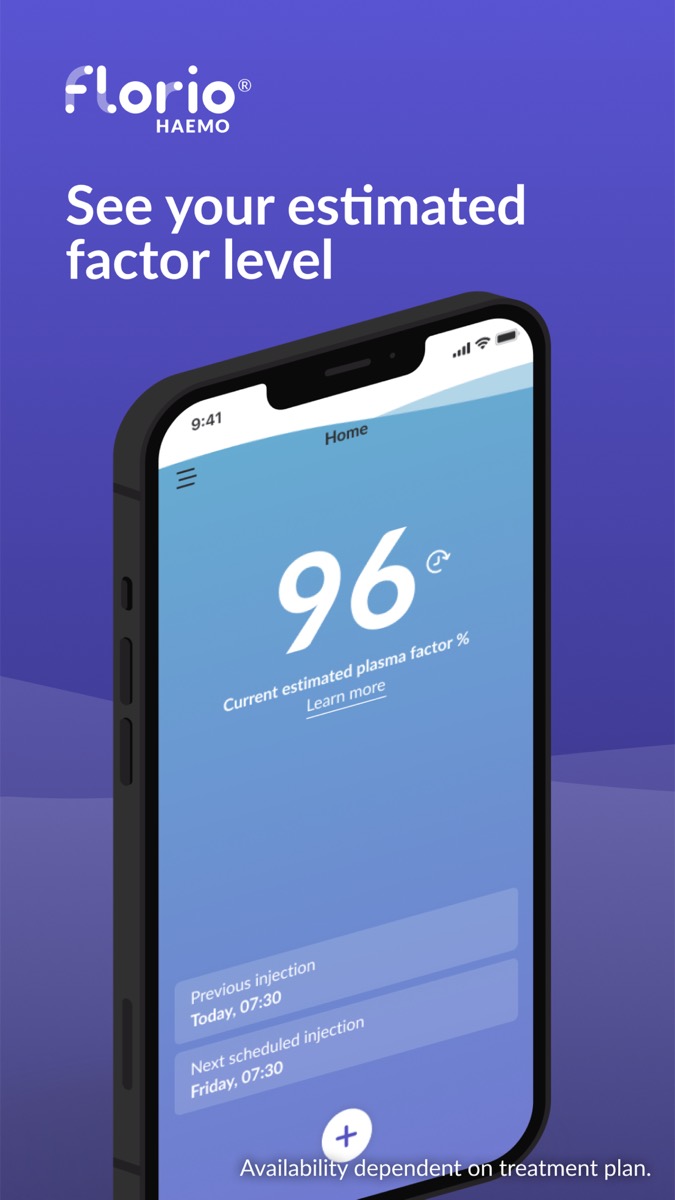
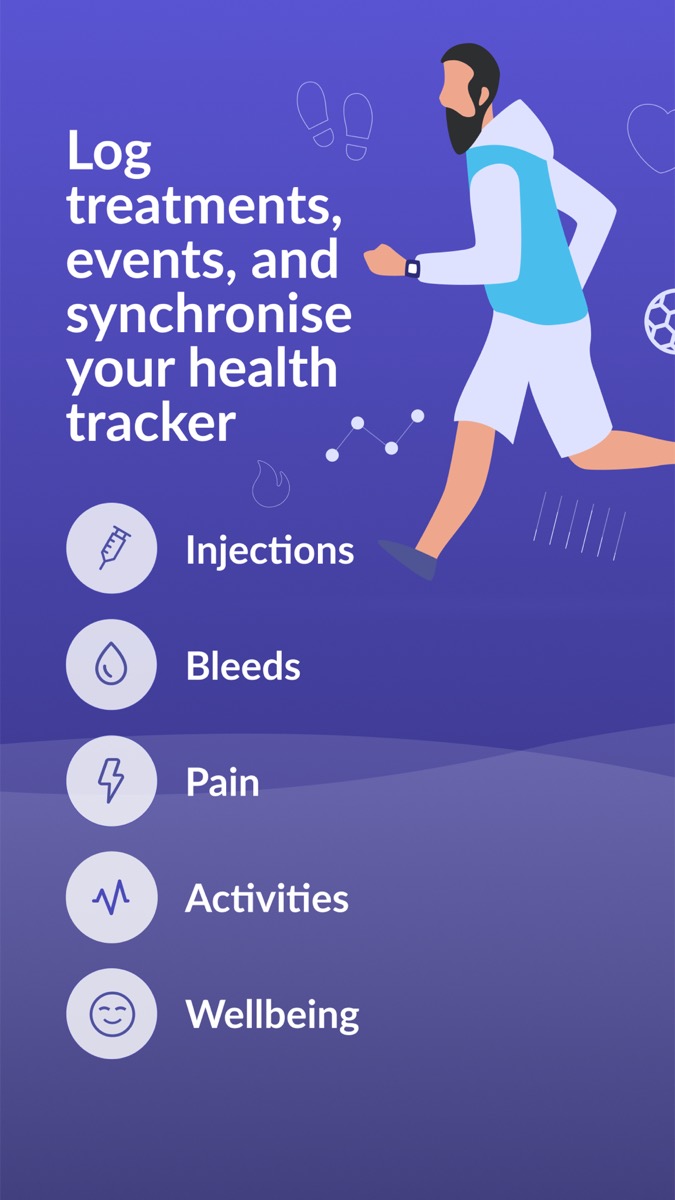
Estimates a plasma factor level between doses and displays it as a single number on the home screen. Logs injections, bleeds, pain, activities and wellbeing, optionally pulling activity data from a wearable through Apple Health. A caregiver mode lets one parent log for several children under 13, and the whole record can be shared with the treatment centre. The store copy carries its own qualifier under the factor number: availability dependent on treatment plan.2
The evidence
A two-part longitudinal survey in Central Europe, funded by Sobi, followed 66 users and then 50 of them about six months later, a 75.8% retention rate. 92% stayed very or rather satisfied, 88% found it intuitive, and 78% had entered all their infusion data for the preceding fortnight.1 Those are good numbers for a logging tool. In the same paper the authors state plainly that the app does not support on-demand therapy, which is the clinical name for treating a bleed that is happening now.
What users say
One rating on the UK App Store, five stars. That is not a sample. Apple's public review feed returns no written reviews for the storefront at all, so there is nothing to quote and nothing is invented here.
Where it stops: a caregiver with a swollen knee at 2am opens florio HAEMO and is shown a modelled percentage. The app is honest about its purpose in its own evidence base: it exists to produce a trend for the next clinic visit, not an instruction for the next ten minutes. Its own caregiver mode is built around a parent logging for a child under 13, so the wife who infuses her husband and the daughter caring for a father with joint damage are not users it has.
myWAPPS and WAPPS-Hemo
McMaster University Health Information Research UnitiOS and Android, freev4.3, 24 Jul 2026On the Singapore App Store, too few local ratings to display
What it does
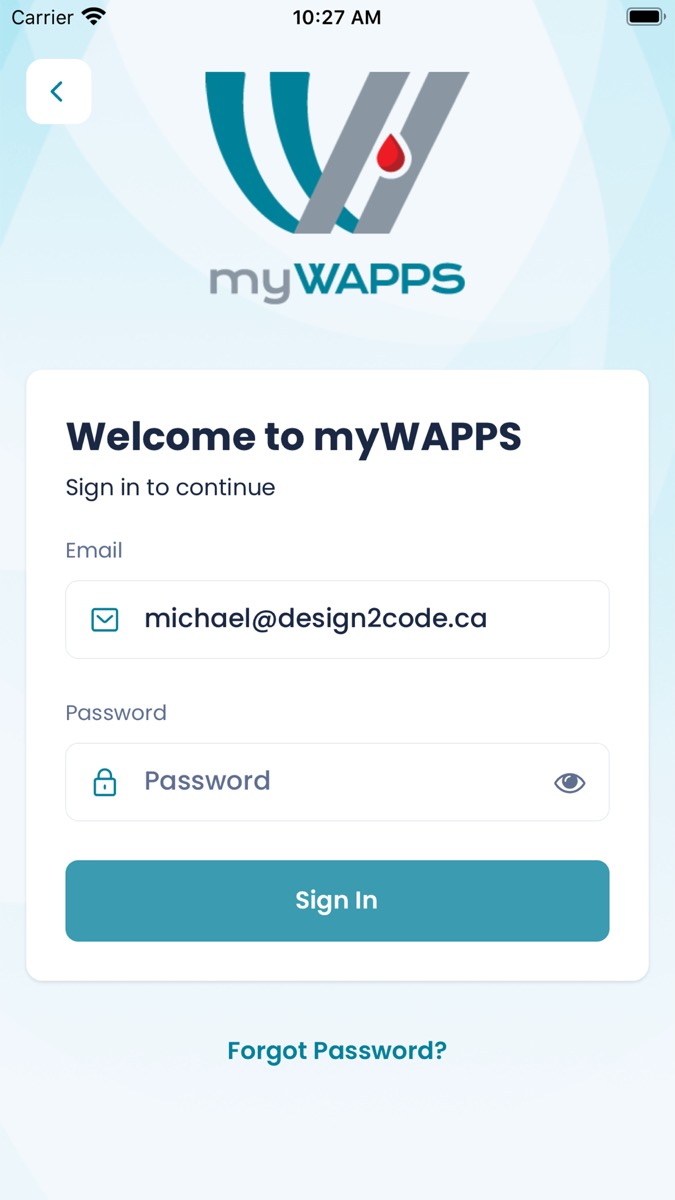
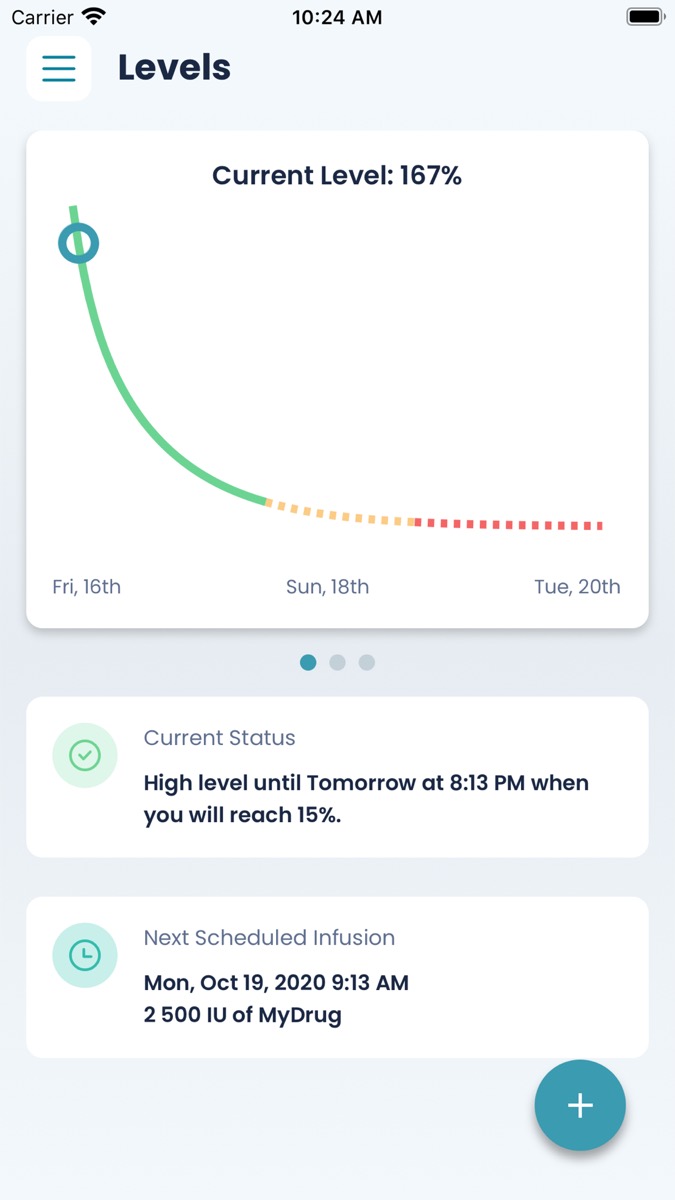
The most clinically sophisticated tool in this category. WAPPS-Hemo is a population pharmacokinetic service that takes two or three sparse blood samples and builds an individualised factor VIII or IX curve; myWAPPS is the patient-facing app that renders that curve on a phone. It shows a live estimated concentration, flags when the level enters a warning zone, and holds the regimen for offline reading.3
The first screen. There is no way past it without a clinician.
The gate
It cannot be self-started. A treating physician has to complete the pharmacokinetic report on wapps-hemo.org before the app activates at all.4 The Coalition for Hemophilia B, reviewing four tracking apps side by side, lists the same constraint as its leading con and adds that not every treatment centre supports it. That review's conclusion about the whole category is one line: emergency guidance is not discussed.6
What users say
One rating on the US App Store, five stars, and no written reviews in Apple's public feed. Again, no sample, and nothing invented.
Where it stops: myWAPPS answers "what is my factor level right now" with real modelling rigour. It has no vocabulary for "and the knee in front of me is swollen", so it cannot connect the number it holds to the symptom the person is looking at. It also fails the 2am test for anyone whose centre never ran the sampling.
Microhealth Bleeding Disorders
MicroHealth Inc, USiOS and Android, free, English and Spanishv3.34.0, 10 Jul 2026On the Singapore App Store, too few local ratings to display
What it does
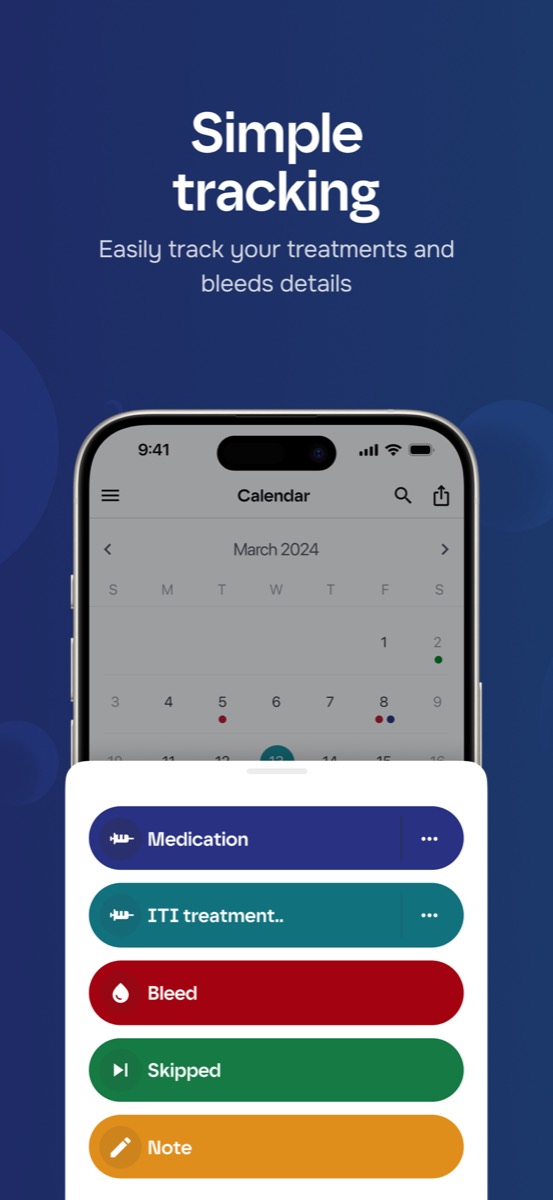
The best-reviewed tool in the category by a wide margin, started by a man with severe haemophilia A working with a Columbia University researcher, and broadened from haemophilia to bleeding disorders generally. Tracks infusions and bleeds, personalises a treatment plan with reminders, scans product lot numbers, monitors home factor inventory and triggers refill requests, supports several family profiles, and notifies the treatment centre nurse when a bleed is logged.5 Its own store copy states it is designed for patient use only and is not a replacement for professional medical advice.
What users say
The best Hemo app, hands down. I can send out logs to the HTC before comp visits! Easy peesy.
Abby from Minnesota, 5 stars, 14 Oct 2025, Apple App Store
Great app, needs more bleed type options. [Requests gastrointestinal and throat categories, and photo support in notes.]
TheThreeBucks, 4 stars, 29 Sep 2018, Apple App Store
I would give 5 stars but... [reports persistent loading failures on QR scanning and manual logging, and a broken in-app support link].
Apirogildo, 1 star, 3 Mar 2025, Apple App Store
4.8 out of 5 from 407 ratings on the US App Store: a real sample and a genuinely liked product. Read as a group, the reviews carry a quieter finding. Across nearly a decade of feedback from the most engaged users in this community, nobody is asking the app to tell them what to do about a bleed. They ask for more bleed categories, better scanning and independent access for teenagers. The category has trained its own users not to expect a decision from it.
Where it stops: Microhealth routes information to a nurse or a pharmacy after the event. It does not evaluate a bleed while it is happening, and the nurse it notifies is not awake at 2am either.
HemMobile
PfizeriOS and Android, freev6.0.1, 2 Jul 2025Returns 404 on the Singapore App Store
What it does
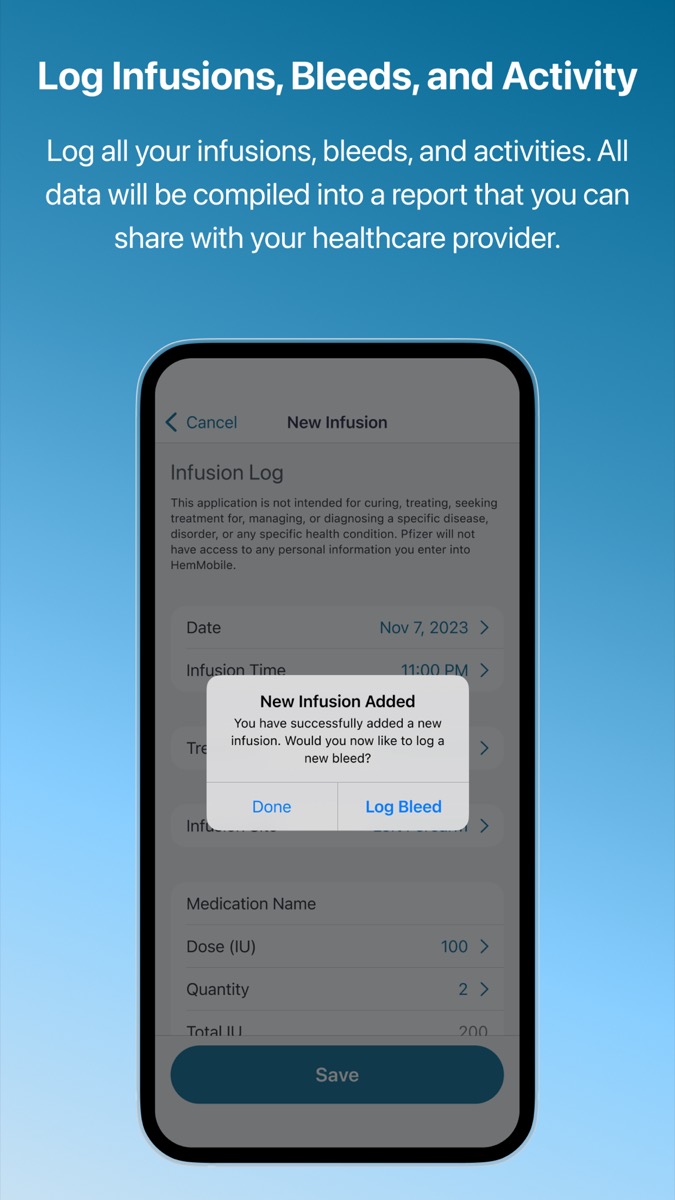
Logs the date, time, site and reason of every infusion for any factor product, captures lot number and expiry through the camera, photographs a bleed and sends it to the treatment centre, sets reorder and appointment reminders, and locates nearby treatment centres. It has no category for von Willebrand disease or haemophilia C.6
Its own disclaimer, printed inside its own screenshot
The App Store gallery image for the infusion log carries the text in full: this application is not intended for curing, treating, seeking treatment for, managing, or diagnosing a specific disease, disorder, or any specific health condition.7 The single most direct statement anywhere in these files that the category is not built for the 2am question comes from a manufacturer's own marketing asset.
What users say
Upon entering the updated app, all of my infusion and bleed logs from the past year were totally GONE.
Tyler B16, 1 star, v6.0.0, 29 Mar 2024, Apple App Store
The app is so slow and boggy. It makes it really hard to use. I'm on an iPhone 13 Pro Max.
NashLites, 2 stars, v5.2.1, 15 Jun 2022, Apple App Store
It crashes so much it's impossible to use.
marcdawg, 2 stars, 29 Apr 2013, Apple App Store
2.9 out of 5 from 7 ratings, a decade after launch, for a tool backed by one of the largest pharmaceutical companies in the world. The negative reviews cluster on two failure modes: data loss on update, and crashes. The basic logging function is not fully trusted, well before any question of guidance arises.
Where it stops: HemMobile disclaims the entire job in its own store copy, and its feature set assumes an open treatment centre relationship during business hours. Photograph the bleed and send it, and nobody reads it until Monday.
Haemtrack
UK Haemophilia Centre Doctors' Organisation, National Haemophilia DatabaseiPhone app and web, freeLaunched 2008UK only, tied to NHS centre registration
What it does
The national electronic home therapy diary for the United Kingdom, with more than 2.5 million treatment records entered since launch.9 Registration is compulsory for anyone on home delivery and recommended for anyone on prophylaxis, and the data flows from the patient's phone to their centre and on to the national database. This is the deepest institutional penetration any haemophilia logging tool has achieved anywhere.
The evidence
Its own stewards published a design and implementation paper in Haemophilia titled, in part, "strengths and weaknesses", which is a rare and creditable thing for a national body to do about its own system.8 Even at 90% centre coverage, adherence to the logging itself has never been complete.
Where it stops: Haemtrack exists to feed a clinical registry. It records what treatment was given, after it was given. It is compliance and outcomes infrastructure, and it makes no attempt to be anything else.
HIRT, the Hemophilia Injury Recognition Tool
Canadian Hemophilia SocietyMobile self-management guideThe closest existing thing to a bleed decision tool
What it does
The one tool found anywhere in this survey that was built to help someone decide about an injury rather than record one. It is scoped tightly: young men aged 18 to 35 with mild haemophilia, facing a minor injury.12
The evidence
A qualitative feasibility study of 12 men. Perceived confidence in injury self-management rose significantly after use (p=0.004), and five themes came out of the interviews: accessibility, credibility, the benefit of alarms, confidence and usefulness. The study's own caveats are the important part: twelve people, self-reported confidence rather than a measured clinical outcome, and a population deliberately restricted to mild disease and minor injury.12
Where it stops: HIRT is proof that the shape works and evidence of how little has been built. The population it excludes by design, severe and moderate haemophilia facing an ambiguous or serious bleed, is exactly the population in these files. It is also Canadian, unavailable here, and has not been developed further in the decade since the study.
Eyes on Haemo
Hong Kong Haemophilia Society with The Chinese University of Hong KongFunded by the Hong Kong Jockey Club Charities TrustFree, iOS, v1.0.2
Why this one matters more than its feature list
It did not appear in any web search. It surfaced only through a direct query to Apple's own search index, and it is the closest regional peer to what this project proposes that exists anywhere.57 Hong Kong is a comparable small, high-income Asian market with its own patient society, and its society partnered with a university and a local charitable trust to build a haemophilia app. Singapore has a society, two academic medical centres and the same problem, and has not.
What it does
In its own words, tailor-made for patients with haemophilia and their carers, to record, review and share bleeding and injection events. Injection reminders, monthly calendar and body-chart summaries of bleeds and injections, one-click report sharing with medical professionals, and the society's own event listings. The body chart is its one distinctive feature and it is a visualisation of the past, not a way in to a decision about tonight.
Where it stops: no triage logic, no red flags, no urgency output. It is the same structured logging tool as the rest of the category, built for the clinic relationship. Its value to these files is as a delivery model rather than a product: a patient society, a university and a local funder is exactly the shape a Singapore equivalent would take, and it is evidence that shape is fundable in this region.
Also examined in this category
myPKFiT
Takeda's pharmacokinetic dosing software, cleared by the US Food and Drug Administration, tied to two specific factor VIII products. Gated by age and weight (12 and over, 29kg for ADYNOVATE; 16 and over, 45kg for ADVATE) and by clinician-run sparse sampling.11 Its own App Store copy is the clearest statement of the gate anywhere in these files: "Only download this myPKFiT for Patients Mobile Application if you have been provided with a QR code by your treating physician", followed by three steps ending in "Log the first infusion to activate the FACTOR METER".56 Without a clinician-issued QR code it does nothing. Zero ratings on both the US and UK stores, for a Takeda-backed FDA-cleared tool a decade old, which is what a clinician-gated distribution model looks like from outside.
MyABDR
The patient app for the Australian Bleeding Disorders Registry, run by the National Blood Authority. Records product and quantity used, times the interval since the last treatment, tracks home stock and sends it all to the treatment centre. Registration requires centre approval.10 Registry infrastructure, like Haemtrack.
myWBDR
The World Federation of Hemophilia's own app, feeding the World Bleeding Disorders Registry.58 Records bleeds and treatment and runs the EQ-5D-5L and PROBE quality-of-life instruments. Its own description says the point is contributing to research. Zero ratings.
MyCBDR
McMaster University's Canadian registry app, the direct equivalent of MyABDR.58 Same one-line purpose: record home treatments.
Care for Haemophilia
An Indonesian university app, filed under Education rather than Medical, whose store description opens in capitals: THIS APP DOES NOT PROVIDE MEDICAL CONSULTATION.59 The bluntest self-disclaimer in these files.
Bleeder
Austria, one independent developer, no registration needed, exports the diary as a PDF.60 It has a configurable warning that fires when a user-set international-unit ceiling is reached, which is the closest thing to a rule-based alert anywhere in this category. It fires on a number the user chose, not on anything about the bleed.
MoHaemophilia
Mauritius. Built by the national association as a digital replacement for the paper health booklet patients used to record bleeds in.60 The same category at the smallest scale found.
ATHNadvoy and Robust Health
The American Thrombosis and Hemostasis Network's logging and centre-communication apps, the second built with three US treatment centres, 4.0 out of 5 from 5 ratings. Same function, same absence of triage logic.
HemaGo
Novo Nordisk's 2012 tracker for factor usage, bleed type, location, duration and pain score, syncing to a manufacturer web portal. A direct query of Apple's search index returns no listing under that name, which suggests but does not prove it has been retired. Haemtrack returns no current listing either; recent NHS communications point to a web app instead.
HemoCoach
Sobi's exercise programme app. Three questions produce a personalised physical activity plan across eight work zones. A fitness tool, in this list only to be ruled out.
Hemmo
A general blood-disorder app for messaging a specialist, requesting prescriptions and storing documents. Not haemophilia-specific and not a decision tool.
HemoHelp
An informational chatbot offering academic material on haemophilia and coagulation, built on a general-purpose language model and positioned as educational. A knowledge layer, with no bleed-specific logic.
Hemotrack, IHTC, Hemophilia B Education Hub
A dual-sided clinician and patient logging tool, a clinician-only reference app from the Indiana Hemophilia and Thrombosis Center that is easy to mistake for a patient tool, and a peer-support and resource community. None is a decision aid, and the last two are not patient-facing decision tools by design.
florio HAEMO. A number.myWAPPS. A curve and a schedule.Microhealth. Five kinds of log entry.HemMobile. The disclaimer, in the marketing.florio HAEMO. Five things to log.
Five screens, four apps, taken from the developers' own App Store galleries on 3 September 2026. Every one is a number, a chart or a form. Not one of them is an instruction.
The category gap: a scoping review of 16 studies of telehealth for haemophilia self-management found the evidence covers electronic logging, reminders and clinician communication, and reported that telemonitoring did not appear to have a significant effect on quantifiable health outcomes such as joint health. Adherence to the systems themselves decayed over the study year, from roughly 95% to 85%.14 A separate Hong Kong survey of 56 patients and parents found they want exactly what the category already gives them: infusion logging (87.5%), bleed documentation (85.7%) and secure delivery to the care team (71.4%). Real-time decision support does not appear in the ranked list.15 Nobody in this category is building towards the 2am decision, and after fifteen years the users have stopped asking for it.
And nothing here is Singaporean. No haemophilia app has been built by HSS, SingHealth, NUH or KKH. Of the international ones, florio HAEMO and HemMobile both return a 404 on the Singapore App Store, and Microhealth and myWAPPS are present but have too few Singapore ratings to display a score, which means almost nobody here is using them. The sharper version of that finding is regional rather than global: Hong Kong, a market of comparable size and wealth with a society comparable to HSS, has an app built by that society with a university and a local charitable trust. Singapore has the society, the hospitals and the same 280 patients, and has no equivalent.57
Category B
Generic symptom checkers and AI triage
Twelve examined. This is the category a family actually reaches for at 2am, because it is the one they already have on their phone. It is also the category with the deepest published evidence base, and that evidence is not reassuring.
Ada Health
Ada Health GmbH, BerliniOS, Android and web4.8 out of 5 from about 11,000 US App Store ratings
What it does
A branching question sequence that returns a ranked list of possible conditions with an urgency recommendation. Ada states 10 million users and 20 million completed assessments, self-reported and not independently audited.
The evidence
The best performer in the largest head-to-head study of the category. In Gilbert and colleagues' 2020 BMJ Open comparison of eight apps against a panel of seven general practitioners on roughly 200 vignettes, Ada placed the correct condition in its top three 71% of the time, against a 38% average for the other apps and 82% for the doctors, and gave advice at least as cautious as the panel in 97.0% of cases.19
What users say
Ada has been able to help me distinguish between when I'm having an anxiety attack or when my muscle aches were more than just side effects of my meds.
Bookworm0917, 14 Dec 2020, Apple App Store
This app really helps reassure me that it's (almost always) all on my head. Helps provide me with peace of mind.
ChiefJake149, 28 Nov 2023, Apple App Store
The second review is the category's self-description in a user's own words. The product these apps deliver, and the reason people rate them highly, is reassurance. For haemophilia, reassurance is the failure mode.
Where it stops: Ada is the best of them and it still has no way to know it is speaking to someone with a factor VIII level under 1%. Its priors are built on what the general population presents with, and a general population's tingling ankle is not an intra-articular bleed.
Babylon Health, and what happened to it
Babylon Holdings Ltd, UKValued near two billion dollars at peakChapter 7 bankruptcy, 9 August 2023
Why it belongs in these files
Babylon is in this landscape not as a competitor, since it no longer exists, but as the category's clearest documented safety record. A UK consultant oncologist, David Watkins, spent roughly three years from 2017 testing its chatbot and reporting the results to the Medicines and Healthcare products Regulatory Agency and the Care Quality Commission, going public on BBC Newsnight in February 2020.20
What the testing found
Identical chest-pain symptoms entered for a man and a woman of the same age produced different advice: the man was sent to an emergency department with heart attack information, the woman was told to see her general practitioner in six hours with panic attack information. An older male smoker with chest pain was offered gastritis or a sickle cell chest crisis and told to see a doctor in six hours. A simulated 66-year-old woman entering a painful breast lump as her only symptom was told osteoporosis was among the likely diagnoses.20
What the regulators said
The MHRA's clinical director for devices wrote to Watkins in 2020 stating that his concerns were all valid and ones the agency shared, and in 2021 the agency publicly flagged a legal gap in how triage chatbots are classified.20 Separately, the Care Quality Commission's 2017 inspection of Babylon's GP at Hand service found it was not providing safe care in accordance with relevant regulations in some areas; Babylon took the regulator to the High Court to block publication of the report, lost, and paid eleven thousand pounds in costs.21 Babylon's public response to Watkins was to call him a troll.20 It filed for bankruptcy in 2023 and was sold for parts.22
Where it stops: the best-funded consumer triage chatbot ever built produced gender-biased cardiac advice, fought its own regulator in court, and is gone. Any argument that a generic engine can be pointed at a rare bleeding disorder has to get past this record first.
WebMD Symptom Checker
Internet BrandsiOS, Android and web4.7 out of 5 from about 135,000 US App Store ratings
What it does and how well
Free-text and checkbox symptom entry returning a list of possible conditions. It is the most-tested tool in the field, appearing in eight of the ten studies in the 2022 npj Digital Medicine systematic review, where its accuracy on the primary diagnosis ranged from 3% to 53% depending on which conditions were tested.18 The spread matters more than the midpoint: the same tool is near-useless on some condition sets and adequate on others, and the user cannot tell which case they are in.
What users say
PLEASE deprecate outdated articles/information. If an article pops up that says something like masks no longer required, but now masks are required again, you create a vicious cycle of misinformation.
Basticat, 30 Jul 2021, Apple App Store
Where it stops: a reference library with a symptom form attached. Enormously popular, and the reason it is popular is that it is a place to read rather than a place to decide.
ChatGPT and other large language models
Not built for triageUsed for it anywayThe realistic default at 2am in 2026
What the evidence actually shows
The headline numbers are better than they look. A 2025 JMIR study reporting 100% triage accuracy for GPT-4 Turbo was scoring against the Modified Early Warning Score across 1,854 simulated scenarios: a structured single-score classification from vital-sign inputs, which is a materially easier task than open-ended symptom interpretation.26 A small 2025 comparison against NHS 111 online on ten vignettes had all three systems scoring nine out of ten; the language models over-triaged a kidney infection to emergency care while NHS 111 under-triaged an acute angle-closure glaucoma.25
The rare-disease problem
Work on rare-disease symptom checking states the mechanism plainly: these tools are built primarily on published literature, which often contains incomplete data on rare diseases, and diagnostic accuracy is compromised as a result.27 The purpose-built rare-disease tool that does exist, FindZebra, states explicitly that it is meant for physicians and other medical specialists, not for patients. No source found reports language-model performance specifically on inherited bleeding disorders.
Where it stops: a general model will answer a haemophilia question at 2am, fluently and instantly, which is precisely the risk. It does not know this patient's factor level, it has no signed clinical source behind the answer, it leaves no record for the treatment centre, and neither the family nor the receiving doctor can audit where the answer came from.
Also examined in this category
Buoy Health
Harvard-originated web and app checker. Scored around 80% on safety in the 2020 BMJ Open comparison, below the bar that Ada, Babylon and Symptomate cleared.19
K Health
Symptom checker routing into a paid consult; top-three condition accuracy of 36.0% in the same study against 82.1% for the doctor panel.19 Reported to have closed its direct-to-consumer app at the end of 2025 and moved to health-system partnerships.
Symptomate and Infermedica
The clearest illustration of the split that runs through this whole category: 19% top-three diagnostic accuracy, the lowest of the eight apps tested, alongside 97.8% safety, among the highest.19 Being safe and being right are different achievements, and the safe answer is usually "see a doctor".
Isabel
A differential-diagnosis tool built for clinicians and offered to patients. Its strongest accuracy figures come from its own validation pages.
Mediktor
Barcelona-built assessment chatbot, sold direct and white-labelled into health systems. Condition coverage of 80.5% in a 2019 ear, nose and throat vignette set, a specialty sample that does not generalise.
NHS 111 online
The UK's official online triage service, launched 2017. A National Institute for Health and Care Research multimethod study found it did not clearly reduce demand on the telephone service or the wider urgent care system.
Healthdirect Symptom Checker
Australia's government-funded tool, with clinical governance and outcomes mapped to real scopes of practice. The closest state-run analogue to what a national bleed tool would need to look like.
Mayo Clinic symptom checker
Included in the original 2015 Harvard benchmark and in the 2022 systematic review. A web tool attached to a reference library.
The evidence on the category as a whole
Four studies2015 to 2022Vignette benchmarks and systematic review
2015, the Harvard benchmark
Semigran and colleagues audited 23 free symptom checkers against 45 standardised vignettes split evenly across emergency, non-emergency and self-care tiers. The correct diagnosis came first in 34% of cases and appeared in the top ten in 58%. Triage advice was correct in 49% of vignettes.16
2022, the five-year follow-up
The same 45 vignettes were re-run against the surviving tools. Median triage accuracy had moved from 59.1% to 55.8%: flat, within noise, after five years of development. Performance decreased on two specific tasks, and one of them is the only one that matters here: advising when emergency care is required. The median app correctly identified 51.9% of emergencies, and few if any outperformed an ordinary person making the same judgement with no tool at all.17
2022, the systematic review
Wallace and colleagues screened 177 studies, included 10, covering 48 distinct checkers. Primary diagnosis accuracy ran 19% to 37.9%; triage accuracy ran 48.8% to 90.1%. One included study found ophthalmic emergencies triaged correctly 39% of the time against 88% for non-urgent ophthalmic cases in the same tool, which is the shape of the problem in miniature: headline accuracy conceals far worse performance on the urgent end. The review concluded that reliance on symptom checkers could pose significant patient safety hazards.18
The pattern: the category is measurably weakest at exactly the judgement a bleeding disorder needs it to be strongest at, and it has not improved. Where a tool is safe, it is safe by escalating, which recreates the over-referral this project is trying to reduce.
Why the logic inverts for haemophilia
The team's own synthesisNo cited source frames it this wayBuilt from the evidence above and the clinical guidance
Stated plainly
No paper found in this survey describes bleeding disorders as a case where symptom-checker logic runs backwards. That framing is this team's, assembled from four separate findings, and it is set out here as analysis rather than as anyone else's claim.
One. These engines are tuned on population base rates, and haemophilia affects about 10.31 per 100,000 males in Singapore. Asked about a warm, sore joint, any well-built model weights strain, arthritis and minor injury far above an internal bleed, because for almost everyone asking, it is.
Two. Absence of symptoms is not reassurance in this condition. In one head-trauma series 72.9% of episodes presented with no symptoms,29 and the Children's Hospital of Philadelphia pathway starts factor correction concurrently with imaging rather than waiting for the picture to clarify.28 A checker reading "knocked head, feels fine" returns self-care, which is the correct answer for the general population and the wrong one here.
Three. The clinical doctrine is the opposite workflow. MASAC Document 257 states that pain and swelling in a joint or muscle directly warrant replacement therapy regardless of investigation results, and that treatment should not be delayed for test results.30 A symptom checker's entire structure, ask more questions, narrow the differential, then recommend a care level, is the inverse of treat first and investigate alongside.
Four. The signal that matters most has no place in a generic question set. The aura, a bubbling or tingling warmth in a joint before any swelling, is the treat-now moment. "Unusual tingling, nothing visible, mild sensation" is the exact input pattern that pushes a general-purpose tool towards reassurance.
What follows: a haemophilia tool cannot be a thinned-down general symptom checker. It has to be a pre-committed decision tree carrying this condition's own inverted risk logic, which is what the precedents in Category G were built to do for other conditions.
Category C
Singapore's triage and diversion layers
Eight examined. The important finding in this category changed during the writing of these files. Singapore has already built a round-the-clock artificial intelligence triage chatbot for parents. It is good, it is free, and it excludes this patient.
KKH U-PAL, the Urgent Paediatric Advice Line
KK Women's and Children's Hospital with SynapxeFree web chatbot, children under 18Now operating around the clock
What it does
The closest thing in Singapore to the tool this project proposes. A chat service, reached from a launcher on the hospital's own page, that performs, in the developer's words, basic medical triaging and provides responses for the majority of common acute concerns, escalating to the care team when it cannot answer. Its stated purpose is to reduce unnecessary emergency department visits among Priority 3 cases.31 Originally an office-hours advice line, it has been rebuilt with generative artificial intelligence and breastfeeding support and now, in KKH's own words, operates around the clock at no cost to users, with only standard local data charges applicable.
Who it is for, in its own words
Common paediatric conditions in children under 18: fever, cough, diarrhoea, vomiting, minor injuries. And who it is not for, quoted in full: "For certain pre-existing or chronic medical conditions, KKH U-PAL may not provide the specialised care your child requires. If your child has any of the following medical history that still requires ongoing follow-up and care, please consult directly with your child's attending doctor or designated care team rather than using this service." The list runs: bowel or abdominal diseases, liver conditions, kidney disease, autoimmune disorders, heart conditions, brain or neurological diseases, endocrine disorders, cancer, complications from prematurity, or long-term immunosuppressive medication.31
The ambiguity that matters
A bleeding disorder is not named in that list. It is also plainly a chronic, specialist-managed, haematology-led condition with ongoing follow-up, which is the description the clause is written to capture. A haemophilia parent reading it at 2am gets no clear answer about whether the service is meant for them, and the direction they are pointed instead, consult your child's attending doctor or care team, is the door that is closed at that hour. The page also carries its own accuracy caveat: responses may not always be completely accurate, and users should exercise appropriate judgement.
Where it stops: U-PAL is the strongest possible evidence that this is buildable and that Singapore's health system is willing to build it. It is also, on its own published scope, generic paediatrics that stops at the door of specialist-managed chronic disease, covers nobody over 18, and has no bleeding-disorder logic in it. It proves the model and marks the gap in the same paragraph.
NurseFirst, 6262 6262
Woodlands Health for Ministry of HealthFree, nurse-staffed, generic protocols8am to 11pm daily
What it does
Emergency-trained nurses working from protocolised questions with emergency-physician oversight, directing callers to general practitioners, urgent care centres, mobile medical teams or teleconsults. From 1 June 2025 a nationwide trial began warm-transferring non-life-threatening 995 callers to it, with patient details passed across and an ambulance dispatched immediately if the caller deteriorates.32
The overnight gap, in the Ministry's own words
"Outside of these hours, if a 995 call is assessed to be non-life-threatening, SCDF will deal with it according to its current protocols."32 Since April 2019 those protocols mean the Singapore Civil Defence Force does not convey assessed non-emergency cases to hospital at all; the caller is advised to see a general practitioner or arrange their own transport. This is the clearest single confirmation of the overnight coverage gap available, and it comes from the Ministry rather than from inference. No outcome data, extension decision or published evaluation of the nationwide trial could be found up to September 2026.
Where it stops: the right model, on the wrong clock, with the wrong protocols. A generic nurse line reading generic questions to a haemophilia caller will either over-refer defensively or miss an inverted presentation, and between 11pm and 8am it does neither, because it is closed.
HealthHub
Synapxe, Health Promotion Board and Ministry of Health4.7 out of 5 from 28,573 App Store ratings, 4.1 from 47,909 on Google Play1M+ installs, v6.0.13
What it actually contains, checked rather than assumed
Biometric login, a customisable dashboard, appointment booking and mobile pre-registration, caregiver access allowing a parent to view records and transact for a dependent, bill payment, prescription viewing and refill management, and the National Electronic Health Record.35 There is no symptom checker, no triage tool and no care-navigation feature anywhere in the feature list, the marketing description or the national programme page. The team re-verified this against the live listing rather than repeating the claim.
What users say
Locked out of accessing her medications. No access granted.
sharpclaws, 4 Feb 2024, Apple App Store. Caregiver access to a dependent's medication refill was revoked, blocking a reorder.
That review matters more than its star rating. Caregiver access to a dependent's medication record is the exact function a haemophilia caregiver depends on, and it is the function the reviewer lost.
Where it stops: the national platform holds the record and books the appointment. It has never been asked to answer a question, and none of its 28,600 reviewers mentions after-hours guidance, because there is no occasion to.
sgcovidcheck.gov.sg, the precedent that was switched off
MOH Office for Healthcare Transformation, NUHS and NCIDLaunched March 2020Domain no longer resolves, checked 3 Sep 2026
What it was
Singapore's government took age, travel and exposure history and symptoms and returned an immediate care recommendation: monitor at home, or seek care in a named setting. It was written up in BMJ Health and Care Informatics.37 It is the closest thing the state has built to a public-facing "should I seek care and where" tool for the general population.
Where it stops: it has been retired, and the retirement is confirmed at the level of the domain rather than assumed: sgcovidcheck.gov.sg no longer resolves at all. The precedent is that Singapore builds this kind of tool when a condition is urgent enough, and decommissions it when the emergency passes. Haemophilia's emergency does not pass.
Also examined in this category
GPFirst
Fifty dollars off the emergency attendance fee plus queue priority for patients referred by a participating general practitioner. From 2014 to 2019 at Changi General Hospital it cut self-referred walk-in attendances by 36 to 40%.33 Proof that a financial nudge and a priority lane change Singaporean behaviour, and a model for what a bleed report handed to an emergency department should buy the family.
Alexandra Hospital Urgent Care Centre
A 24-hour walk-in centre that from October 2025 began receiving eligible non-life-threatening ambulance cases.34 A real destination between home and the emergency department, and evidence that the middle tier this project's output points to actually exists.
995 and SCDF
Free conveyance for genuine emergencies, and a flat S$274 charge if a conveyed case is assessed as non-emergency.38 The price of guessing upward, and a documented reason families hesitate.
Healthy 365
The Health Promotion Board's steps, rewards and healthier-choice app. Checked and ruled out: no symptom checker, no triage, no acute guidance of any kind. Included here so that nobody cites it as prior art in either direction.
The category gap: Singapore is building this layer deliberately. It replaced a blunt two-number ambulance system with assessed nurse triage, opened destinations between home and the emergency department, priced the nudge to use them, and has now put a generative-AI advice chatbot in front of parents around the clock. Every piece of the machine exists. None of it is pointed at a rare condition whose heuristics invert, and the one round-the-clock piece excludes chronic specialist-managed disease by design.
Category D
Commercial telehealth
Five examined, four of them in full. All are available at 2am, or say they are. All are staffed by generalists with no access to a factor level, an inhibitor status or a bleed history, and most exclude emergencies in their own terms.
Doctor Anywhere
24/7 video consults, about S$20 to S$254.9 out of 5 from 26,969 Singapore App Store ratings4.9 out of 5 from 50,220 Google Play ratings, 1M+ installs
What its own terms say
In capitals, in its Terms and Conditions: do not use the video consultation functionality on the application for a medical emergency. The terms then list what video consultation is not appropriate for, including urgent care or emergency conditions, severe pain, breathlessness, undiagnosed chronic conditions, and anything requiring physical examination or laboratory tests.39 The wording is precise: it excludes undiagnosed chronic conditions, so a diagnosed haemophilia patient is not automatically shut out. The emergency exclusion still applies, and no bleeding-disorder pathway exists.
What users say
Waited over an hour for packing and delivery with no way to track location. I was in a lot of pain and in a rush, still awake at 4am waiting.
"Help((((((((", 2 stars, 14 Jan 2025, Apple App Store
First consultation with Dr Joel Lim was efficient, professional and thoughtful. He treated me like an actual patient.
A. Jameson, 5 stars, 14 Nov 2024, Apple App Store
The first is the single most on-point review found anywhere in this survey. A real user, at 4am, in pain, using the best-rated telehealth app in Singapore, with no visibility into when help would arrive. The 4.9 rating is real and so is that night.
Where it stops: a generalist on a ten-minute video call, with no factor level, no inhibitor status and no bleed history, facing a rare condition where the safe-looking answer can be the wrong one. The defensible thing for that doctor to do is send the family to the emergency department, which is the over-referral this project exists to reduce.
WhiteCoat
24/7 teleconsults with medication delivery4.7 out of 5 from 4,442 App Store ratings, 4.9 from 2,880 on Google PlayFirst telemedicine provider in MOH's regulatory sandbox
What users say, including the case against these files' own argument
Describes a WhiteCoat doctor identifying a possible corneal ulcer in the reviewer's son and recommending immediate A&E because it was a weekend and no ophthalmology clinic was open. The son was later diagnosed with an aggressive viral infection, and the reviewer credits the early referral with preventing vision loss.
dopa23mine, 18 Oct 2021, Apple App Store
Waited 4.5 hours to get to see doctor. At 12 noon, there were 28 patients.
yzoe777, 20 Feb 2022, Apple App Store
The first review is included because it is the honest counter-example and these files are worse without it. A competent generalist recognised something outside their scope and escalated correctly, at a weekend, and a child kept his sight. That is the system working.
Where it stops: the escalation worked because the doctor could see the eye. Haemophilia's dangerous bleeds are the ones that cannot be seen: intracranial, retroperitoneal, iliopsoas, a compartment filling in a forearm. Recognition is the whole task, and it is the part a video call cannot do.
MaNaDr, and the regulatory record
Teleconsults with an AI assistant4.8 out of 5 from 5,736 App Store ratings, 4.8 from 5,062 on Google PlayLicence revocation notice, 24 October 2024
What the Ministry of Health found
On 16 August 2024 the Ministry directed MaNaDr Clinic to stop providing outpatient medical services by teleconsultation, having found more than 100,000 teleconsultations involving video calls of one minute or less, the shortest lasting one second; more than 1,500 patients issued medical certificates on five or more occasions in a single sampled month, one patient receiving 19; and case notes either implausibly detailed for the length of the call or extremely sparse.42 On 24 October it issued a notice of intended licence revocation, citing an entrenched culture of disregard for the applicable clinical and ethical standards, and referred 41 doctors to the Singapore Medical Council.43
How far this can fairly be taken
The Ministry framed this as a failure of teleconsultation ethics and medical certificate issuance, not as an emergency mis-triage incident, and it should not be presented as a haemophilia case. What it does establish, on the regulator's own record, is that Singapore's generalist telehealth sector has a documented quality-control problem in exactly the format a rare-disease patient would meet at 2am: the brief, generic consultation.
Where it stops: the app is still rated 4.8 by its users. Consumer satisfaction and clinical adequacy are measuring different things, and for a bleeding disorder only one of them matters.
Speedoc
Video consults 7am to midnight, house calls and IV care advertised as 24/74.7 out of 5 from 3,944 Singapore App Store ratings4.5 out of 5 from 3,374 Google Play ratings
What it says it is for
The one provider in this category that names chronic-condition follow-up as in scope, alongside mild and common symptoms, urgent care and specialist referrals. Anything life-threatening is routed to 995 or the emergency department.41
What users say
Family needed ambulance, by the time i checked in on them they still could tell me they reached out to their many private partners and none of them responded. Better off calling 995 of 1777. Complete and utter waste of precious time when it comes to emergencies.
Lorlorxue, 1 star, 27 Mar 2022, Apple App Store, titled "Horrifying service. Avoid during emergency"
Medicine delivery took more than 4hrs. In fact, it was already midnight and the medicine was still not here yet so we went to A&E instead. Do u think a sick person would be able to stay up till midnight??
"Forced to do so", 1 star, 5 Mar 2022, Apple App Store
App should have a helpline after 8pm if they are allowing 24/7 services.
eunnie95, 3 stars, 12 May 2022, Apple App Store
Three reviews, one failure mode: the advertised hours and the delivered hours are different things, and the gap opens after dark. The first is the sharpest piece of evidence in this category, because it is a Singapore family in a real emergency being told by the product that they should have called 995. Fairness requires two caveats: these are 2022 reviews, which is as recent as Apple's public feed reaches for this app, and the 4.7 average is real.
Where it stops: the policy is correct on paper and this is what it looked like on one night. A haemophilia family cannot plan around a service whose overnight availability is the part users dispute, and Speedoc's own answer for an emergency is the ambulance number the family was trying to avoid needing.
Also examined in this category
Homage
Scheduled home care and visits, 4.7 out of 5 from 864 App Store ratings and 3.9 from 573 on Google Play, the lowest Play rating of the six.44 Built for planned care rather than urgent response; several reviews describe last-minute cancellations. Out of scope for an acute bleed by design rather than by omission.
The category gap: five products, all reachable at 2am, all excellent at what they are for, and not one of them has a bleeding-disorder pathway, a way to read a factor level, or any published claim to handle rare complex conditions beyond routine follow-up prescriptions. Three of the five route emergencies straight back out to 995 in their own terms.
Category E
Static clinical guidance
Five examined. The doctrine that would answer the question is already written, published, free and correct. It is also a document, and the failure it produces is documented in emergency department audit data.
The doctrine, and the evidence that it does not survive contact with 2am
WFH 3rd edition, MASAC 257, SingHealth, HSSAll free, all published, all correct
What exists
The World Federation of Hemophilia's third-edition guidelines set the system-level expectation of round-the-clock access to emergency medicines and clotting factor.45 MASAC Document 257 codifies the rules a family needs: treat before diagnostic studies, treat on suspicion rather than documentation, assume a factor level of zero when it is unknown, and get factor into the patient within an hour of arrival.30 SingHealth's own haemophilia page gives Singapore families the operative instruction, that during office hours they call the Children's Day Therapy Centre or the haematology resource nurse, that after hours they attend the Children's Emergency at KKH Basement 1 and notify the nurse the next working day, and that treatment should happen within one to two hours of onset. Its summary line is three words: if in doubt, treat.46
What happens anyway
A 2025 audit in Pediatric Blood and Cancer measured the gap between doctrine and delivery: a median 2.9 hours from triage to ordering haemostatic therapy, 4.2 hours to administration, against MASAC's one-hour standard, and fewer than a third of emergency visits by haemophilia patients ending in haemostatic therapy at all.48
The emergency card schemes
The field has already tried the obvious fix. The World Federation of Hemophilia issues an international identity card designed to be unobtrusive but available. The UK's National Haemophilia Database issues a bleeding disorder card to every registered patient, carrying condition details, an emergency contact and treatment advice, to be shown to emergency staff on arrival. The US programme is called FactorFirst, and its purpose is to shortcut the diagnostic workup entirely.47
Where it stops: this is the most important finding in these files and the one that most sharpens what the build has to be. Haemophilia already has the right doctrine, and a physical delivery mechanism for it, and it still fails at the point of care. The unmet need is not another statement of the rule. It is getting a specific family to the right decision at 2am, and giving them something the receiving clinician recognises fast enough to act on. A 300-page guideline is the right content at the wrong moment, unreadable in the state of brain switch-off a family hits at 2am.
Category F
The informal layer
Four examined, and this is the honest answer to what actually gets used. Everything above is what exists. This is what happens.
What families reach for at 2am
From the team's own HSS interviews and the 30 Aug 2026 patient journey summary55
Spreadsheets
Work well for routine prophylaxis, and break on travel, on a missed dose, and whenever the recorded stock drifts from what is actually in the fridge.
Group chats and forums
Disorganised, unsearchable and unvalidated. Patients themselves say they disregard them, which is the significant part: the informal layer is not trusted even by the people inside it.
Paper discharge notes and saved screenshots
The reference layer families scour once the clinic lines are closed. Undated, uncontrolled, and specific to whichever visit produced them.
Memory and trial and error
What is left when the paper and the screenshots run out. The team's interviews found that off-hours guidance seeking largely does not happen at all: families repeat the usual dose and monitor on self-invented windows, an hour for a hip bleed, up to a day elsewhere, before deciding anything more.
Where it stops: this is the real incumbent, and the thing any new tool has to be better than on the first night. None of it is signed, current or personal, and none of it leaves a record anyone can hand to a doctor.
Category G
What does give an action, for other conditions
Seven examined. These are not competitors. They are proof that the format exists, works and is evidenced, and that the only reason haemophilia does not have one is that nobody has built it.
The ASCIA anaphylaxis action plan
Australasian Society of Clinical Immunology and AllergyOne page, colour-coded, device-specificRedesigned 2023, first major change in 20 years
Given to every patient prescribed an adrenaline autoinjector, in a general version plus four device-specific versions. The 2023 revision added colour coding by device and QR codes linking to short injection videos on the plan itself.49 The structure is what matters: recognise a defined symptom set, use the device now, call emergency services. There is no differential diagnosis step anywhere in it.
The lesson: at the moment of crisis, a pre-agreed instruction beats an assessment. This is the benchmark row in the scorecard below, and it is the only artefact in these files that passes all four tests.
Asthma action plans, green, yellow and red
The best-evidenced action plan format in medicineCochrane review of 18 randomised trials
A written, individualised traffic-light plan: green for baseline control, yellow for loss of control with a defined step-up, red for urgent action. The Cochrane review of 18 randomised trials found that a written plan combined with education and regular review significantly reduces hospitalisations, emergency visits, unscheduled doctor visits, days lost from work and school, and nocturnal symptoms.50 The yellow zone is specified to the dose: trials show a four to five-fold increase in inhaled corticosteroid for 7 to 14 days works, and simply doubling the dose does not.
The lesson, and the warning: specificity is the active ingredient, and a good artefact does not implement itself. The same literature describes written asthma action plans as a niche practice and an example of ineffective guideline implementation despite the evidence behind them.50 Being correct is necessary and nowhere near sufficient.
Seizure action plans, and a methodology worth copying
American Academy of Pediatrics, Seizure Action Plan CoalitionIndividualised plan plus rescue medication
An individualised plan capturing seizure type and history with step-by-step instructions, paired with a rescue benzodiazepine to abort a prolonged seizure before it becomes status epilepticus. An expert panel published formal recommendations to standardise the format across settings.51
The lesson: the epilepsy field published a paper explicitly distilling insights from other chronic conditions' emergency action plans to design its own. That is the same exercise these files are performing for haemophilia, and it is worth reading before the format is fixed.
Also examined in this category
The 15-15 rule for hypoglycaemia
Fifteen grams of fast-acting carbohydrate, wait fifteen minutes, recheck, repeat. The most memorised rule in chronic disease self-management, and now under systematic review because it predates continuous glucose monitors and modern insulins, with Canadian research finding real episodes take longer and more carbohydrate than the rule allows.52 The lesson is to build something revisable, not to treat a first version as final.
Continuous glucose monitor alerting
Configurable low thresholds plus a distinct predictive alert when a value at or below 55 mg/dL is forecast within 20 minutes.52 A precedent for tiered and predictive alerting: separating act now from this is trending towards act now.
Warfarin self-management
The cleanest evidence in these files for why a decision tool beats an information tool. Self-testing alone improves time in therapeutic range; self-management, which is self-testing plus a pre-agreed dose adjustment rule, is what shows reduced thromboembolic events.53 Measurement plus a decision rule outperforms measurement. Uptake is still under one in seven eligible patients, which is the same adoption warning the asthma plans give.
Sickle cell disease
Included as a negative precedent. No widely adopted one-page crisis action plan was found; the published digital work is a stress and pain self-monitoring app tested in a 170-patient randomised trial. Even in a well-known haematological emergency, the field has invested in longitudinal self-monitoring rather than a crisis-moment artefact.
The category gap: every one of these was built for a condition where a layperson must act correctly under stress with no clinician present. Every one replaced open-ended assessment with a small number of pre-agreed paths. Haemophilia has the doctrine, has the emergency card, and has never had the third thing: a personalised, always-open artefact that turns the doctrine into tonight's instruction.
The scorecard
Twenty-five tools that offer an answer, read against the four tests. Places that provide care rather than answers, the emergency department, urgent care centres and GPFirst, are left out: they are the destinations an answer points to, not competitors to the answer. The last row is a different condition, included to show what passing looks like.
Compiled 3 September 2026. Yes means the tool meets the test as published. Part means it meets it conditionally, or for some users, or only after a clinician sets it up. No means it does not attempt it.
Tool
Open at 2am
Knows this patient
Reads site, not severity
Ends in an action
A. Haemophilia apps
florio HAEMO
yes
part
no
no
myWAPPS clinician-gated
yes
part
no
no
Microhealth Bleeding Disorders
yes
part
no
no
HemMobile
yes
part
no
no
Haemtrack UK only
yes
part
no
no
MyABDR Australia only
yes
part
no
no
Eyes on Haemo Hong Kong
yes
part
no
no
myPKFiT two products, QR-gated
yes
part
no
no
HIRT mild disease, minor injury
yes
no
part
part
B. Symptom checkers and AI triage
Ada Health
yes
no
no
part
WebMD Symptom Checker
yes
no
no
no
Symptomate and Infermedica
yes
no
no
part
NHS 111 online UK only
yes
no
no
part
ChatGPT and other language models
yes
no
no
part
C. Singapore's triage layers
KKH U-PAL under 18, excludes chronic specialist care
yes
no
no
part
NurseFirst 6262 6262 8am to 11pm
no
no
no
part
HealthHub
yes
part
no
no
D. Commercial telehealth
Doctor Anywhere
yes
no
no
part
WhiteCoat
yes
no
no
part
Speedoc video 7am to midnight
part
no
no
part
MaNaDr
yes
no
no
part
E and F. Guidance and the informal layer
WFH guidelines, 3rd edition
yes
no
yes
part
MASAC Document 257 written for clinicians
yes
no
yes
part
Bleeding disorder emergency card
yes
yes
no
part
Spreadsheets, chats, paper, memory
yes
part
no
no
ASCIA anaphylaxis action plan a different condition, for comparison
yes
yes
yes
yes
Reading down the columns: almost everything is open at 2am, because almost everything is an app. Almost nothing knows the patient, because the tools that hold the data give no advice and the services that give advice hold no data. Only the written guidelines read by site rather than severity, and they are documents. Nothing built for haemophilia ends in a personalised action.
The verdict
Sixty-three tools, and the field splits cleanly in two. The apps hold the patient and say nothing. They know the factor product, the dose, the bleed history and the stock in the fridge, and their published purpose, in their own studies and their own store copy, is to produce a trend for the next clinic visit. The services speak and know nothing. A nurse line, a teleconsult doctor or a general symptom checker will give an answer at 2am without any access to the one patient record that would make the answer safe.
Four specific things have to be true at once, and no publicly documented tool does all four:
It is awake between 11pm and 8am, which is when Singapore's assessed triage layer is not.
It already knows the factor type, severity, inhibitor status, target joints and home stock, so the answer is about this patient rather than about haemophilia in general.
It routes on the site of the bleed rather than how bad it looks, because in this condition a head knock with no symptoms outranks a visibly swollen ankle.
It ends in a dose, a destination and a handover the emergency department recognises, so that following the advice buys the family something at the receiving end, the way GPFirst does.
The doctrine for all of this was written years ago and is free to read. The format that delivers doctrine to a frightened person at 2am was solved for anaphylaxis, asthma, epilepsy and hypoglycaemia. KKH has now proved Singapore will run a round-the-clock advice chatbot for parents, and excludes chronic specialist-managed conditions from it. Every component exists. Nobody has assembled them for a bleeding disorder. That is the space the solution files builds into.
What these files could not verify
Stated so that a judge or a clinician can find the soft edges without hunting for them.
Google Play figures are given for the six Singapore consumer apps, read from the live listings. They are omitted for the haemophilia apps, where the Play page could not be read reliably: one attempt returned a review count that turned out to belong to an unrelated app recommended on the same page, so Apple figures are used there rather than risk a contaminated number.61
florio HAEMO and myWAPPS each carry a single App Store rating, and myPKFiT, myWBDR, MyCBDR, Eyes on Haemo, Care for Haemophilia, Bleeder and MoHaemophilia carry none at all. No user review text exists to quote for any of them, and none has been invented.
The Speedoc reviews quoted are from 2022, which is as far back as Apple's public feed reaches for that app. They are not current sentiment and are not presented as such.
No outcome data, extension decision or published evaluation of the nationwide NurseFirst trial could be found up to September 2026, so no effectiveness figure is quoted for it.
Whether a bleeding disorder falls inside KKH U-PAL's exclusion list is a genuine ambiguity in KKH's own published wording, read here as unresolved rather than settled either way.
The inversion argument in Category B is the team's own synthesis. No source found states that symptom-checker logic runs backwards for haemophilia, and it is presented as analysis, not as anyone else's finding.
Two directly relevant papers, the 2025 npj Digital Medicine comparison of checkers, language models and laypeople, and the 2020 Medical Journal of Australia evaluation of Australian checkers, were behind access barriers, so no figures from either are cited.
Sources
Zapotocka et al., florio HAEMO: A Longitudinal Survey of Patient Preference, Adherence and Wearable Functionality, Advances in Therapy, 2024
florio HAEMO, Apple App Store listing and florio.com, checked 3 Sep 2026
WAPPS-Hemo, McMaster University Health Information Research Unit
myWAPPS, Apple App Store listing, v4.3, checked 3 Sep 2026
Microhealth Bleeding Disorders, Apple App Store, 4.8 from 407 ratings, checked 3 Sep 2026
Coalition for Hemophilia B, What hemophilia tracking app should I be using
HemMobile, Apple App Store listing and gallery, v6.0.1, checked 3 Sep 2026
Hay et al., The haemtrack home therapy reporting system: design, implementation, strengths and weaknesses, Haemophilia, 2017
UKHCDO National Haemophilia Database; University Hospital Southampton Haemtrack patient factsheet
National Blood Authority Australia, MyABDR; Haemophilia Foundation Australia
Takeda, myPKFiT for ADYNOVATE launch release, 2020
Canadian Hemophilia Society, HIRT; Are you HIRT? feasibility study, n=12
Dirzu et al., Mobile Health Technology for the Personalized Therapy of Hemophilia, Frontiers in Medicine, 2021
Qian et al., Telehealth Interventions for Improving Self-Management in Patients With Hemophilia: Scoping Review, JMIR, 2019
Technology Acceptance Among Patients With Hemophilia in Hong Kong, JMIR Formative Research, 2021, n=56
Semigran et al., Evaluation of symptom checkers for self diagnosis and triage, BMJ, 2015
Wallace et al., The diagnostic and triage accuracy of digital and online symptom checker tools, npj Digital Medicine, 2022
Gilbert et al., How accurate are digital symptom assessment apps, BMJ Open, 2020
TechCrunch, First do no harm, Feb 2020, and MHRA comment reported Mar 2021
The Register, Babylon withdraws challenge against health regulator report, Dec 2017
TechCrunch, The fall of Babylon, Aug 2023
Ada Health, Apple App Store listing and reviews, checked 3 Sep 2026
WebMD Symptom Checker, Apple App Store listing and reviews, checked 3 Sep 2026
Evaluation of Artificial Intelligence for Patient Self-Triage, 2025, NHS 111 online against ChatGPT and Gemini
Patient Triage and Guidance in Emergency Departments Using Large Language Models, JMIR, 2025
Fabry disease mixed-methods study on rare-disease symptom checkers; FindZebra scope statement
Children's Hospital of Philadelphia, Hemophilia with Head Trauma Clinical Pathway
Head trauma in haemophilia, 72.9% asymptomatic presentation, PubMed 29873151
National Bleeding Disorders Foundation, MASAC Document 257, approved 2 Dec 2019
KK Women's and Children's Hospital, U-PAL; Synapxe, KKH U-PAL chatbot, checked 3 Sep 2026
MOH, Nation-wide trial to refer non-life-threatening 995 calls to the NurseFirst helpline, 30 May 2025
MOH, GPFirst; Changi General Hospital, GPFirst: a journey of changing attitudes and improving patient care
NUHS, Alexandra Hospital to receive eligible non-life-threatening cases, 2025
HealthHub SG, Apple App Store, 4.7 from about 28,600 ratings; Synapxe HealthHub programme page
Health Promotion Board, Healthy 365, feature set checked 3 Sep 2026
MOH Office for Healthcare Transformation, COVID-19 Symptom Checker Launched, 2020; sgcovidcheck.gov.sg no longer resolves, checked 3 Sep 2026
SCDF, Emergency Medical Services
Doctor Anywhere, Apple App Store listing and Terms and Conditions, checked 3 Sep 2026
WhiteCoat, Apple App Store listing and reviews, checked 3 Sep 2026
Speedoc, Apple App Store listing and published FAQ
MOH, MaNaDr Clinic Instructed to Stop Provision of Outpatient Medical Services via Teleconsultation, 16 Aug 2024
MOH, Regulatory Action Against MaNaDr Clinic and Doctors Involved in Potential Professional Misconduct, 24 Oct 2024
Homage, Apple App Store listing, checked 3 Sep 2026
Srivastava et al., WFH Guidelines for the Management of Hemophilia, 3rd edition, Haemophilia, 2020
SingHealth, Haemophilia (Childhood Illnesses)
World Federation of Hemophilia International Identity Card; UKHCDO Bleeding Disorder Card; NBDF FactorFirst
Improving Time to Bleeding Disorder Treatment in the Emergency Department, Pediatric Blood and Cancer, 2025
ASCIA, Action Plans for Anaphylaxis, 2023 revision
Cochrane review of written asthma action plans, 18 randomised trials; npj Primary Care Respiratory Medicine, Solving the mystery of the yellow zone
American Academy of Pediatrics, Seizure Rescue Medications and Seizure Action Plan; Recommendations for development of acute seizure action plans
The 15-15 rule systematic review; Real-World Evidence and Glycemic Improvement Using Dexcom G6 Features
Warfarin patient self-testing and self-management outcomes literature
Haemophilia Society of Singapore, Treatment in Singapore
Team primary research, Patient Journey and Pain Points, HSS Summary, 30 Aug 2026
myPKFiT for Patients, Apple App Store id 1208272930, Takeda, checked 3 Sep 2026
Eyes on Haemo, Hong Kong Haemophilia Society with The Chinese University of Hong Kong, funded by the Hong Kong Jockey Club Charities Trust, Apple App Store id 1589167372
myWBDR, World Federation of Hemophilia, Apple App Store id 1544989257; MyCBDR, McMaster University, id 1080642378
Care for Haemophilia, Universitas Lambung Mangkurat, Apple App Store id 1672502386
Bleeder, Hannes Jung, Apple App Store id 1137943402; MoHaemophilia, Haemophilia Association of Mauritius, id 6499239638
Google Play listings for HealthHub, Doctor Anywhere, WhiteCoat, Speedoc, MaNaDr and Homage, captured 3 Sep 2026
A HackitRx 2026 entry by AuraHack: Ariel Tan, Rachel Koh, Myo Myo Swe Oo and Gerald Ho. See the team.
Every source above is developed in full in the team's research notes, kept with the project. App-store ratings, reviews and screenshots were captured on 3 September 2026 and change continuously. The full source library for the case files is at the WFH files. Compiled 3 Sep 2026 for HackitRx 2026 research. Companion to the case files, the patient journey file and the solution files.